
Organic mulch such as wood chips and bark can provide real benefits to your landscape. But these materials are also combustible.
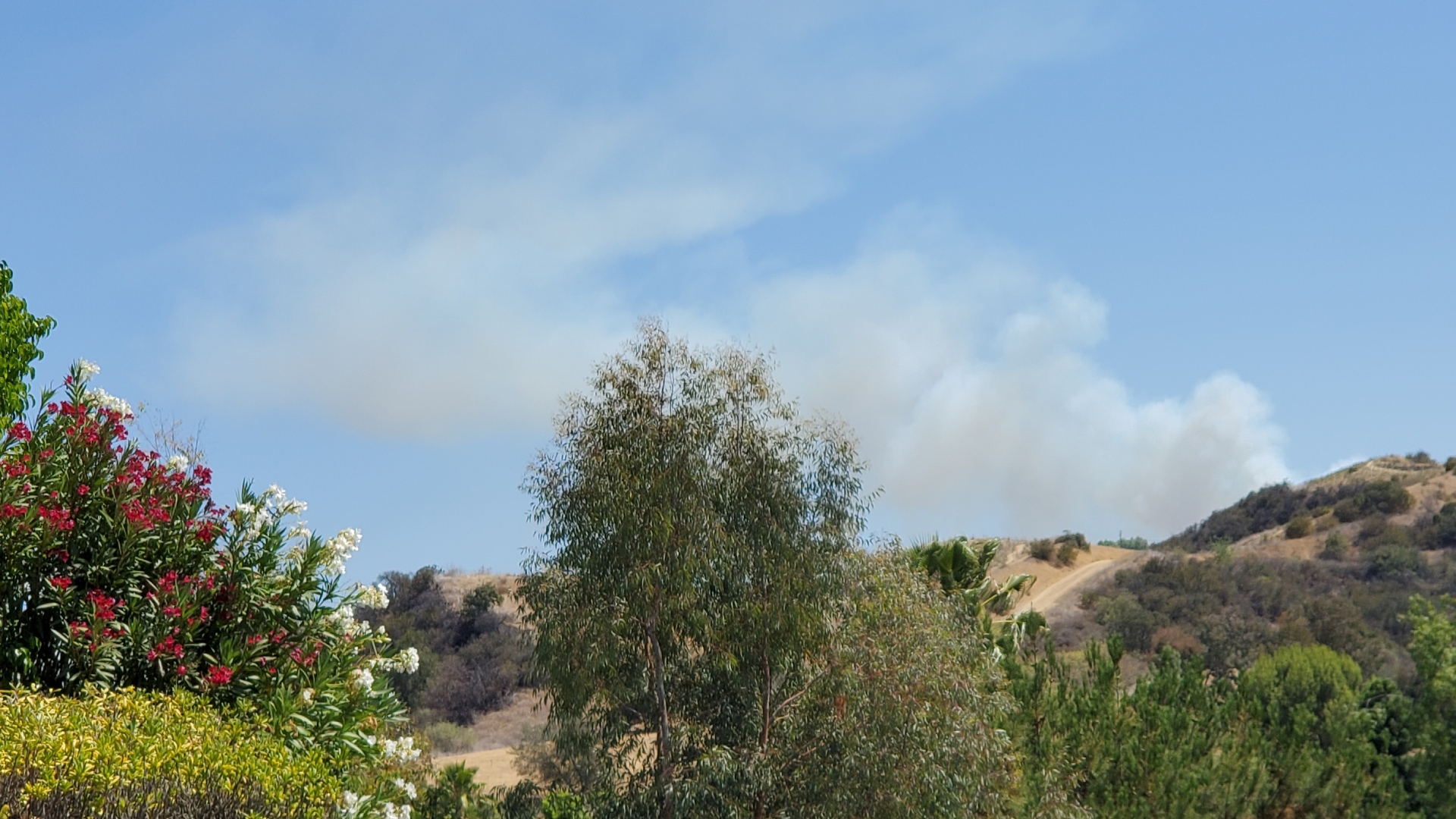
During a wildfire, wind-driven embers can travel considerable distances and collect around homes. Embers and combustible mulch next to a structure can ignite your home.
Is There a “Fire-Safe” Mulch? : Combustible versus Non-combustible
Wood chips and pine needles versus rock and gravel
In a wildfire-prone community like Calabasas, the kind of mulch you use and where you put it matters.
An easy rule to remember:
- 0–5 feet: Go non-combustible.
- 5–30 feet: Use organic mulch selectively and interrupt continuous areas.
- 30–100 feet: More flexibility, while continuing to manage fuel.
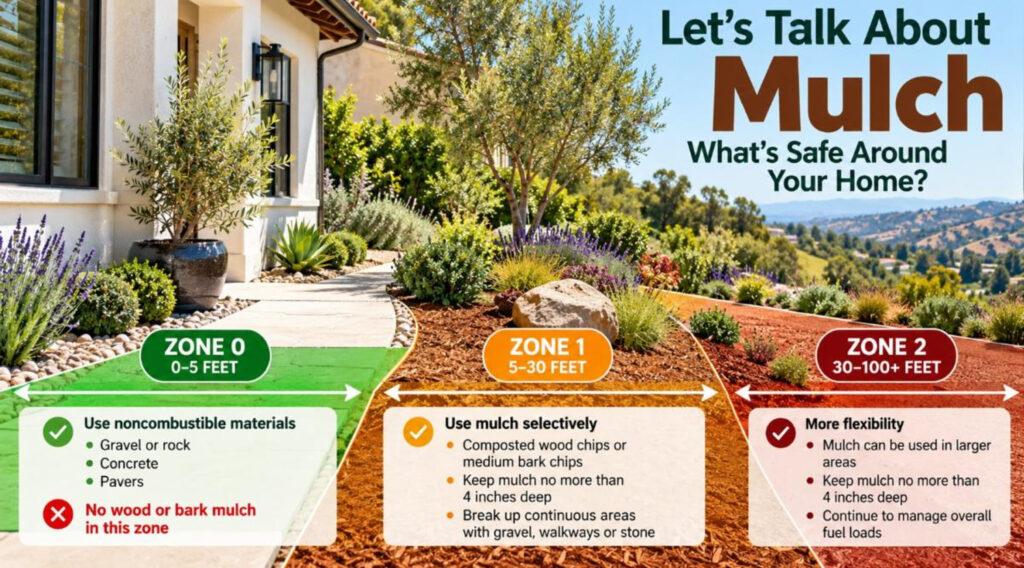
Zone 0: 0–5 Feet
The first five feet around your home is known as the Ember-Resistant Zone.
CAL FIRE’s Defensible Space guidance recommends using non-combustible materials such as:
- Gravel or rock
- Concrete
- Pavers
- Bare Earth
Avoid combustible mulch, including bark and wood chips, within the first five feet of your home.
Zone 1: 5–30 Feet
Beyond the first five feet, you have more flexibility.
Organic combustible mulch no more than four inches deep can be used, but avoid creating a continuous pathway to your home. Large, mulched areas can be broken up with non-combustible features such as gravel, stone, concrete, bare earth or walkways.
UC ANR Fire Network – Mulch recommends options such as composted wood chips and medium-sized bark chips.
Zone 2: 30–100 Feet
Farther from the house, organic mulch can be used more freely.
Keep mulch maintained, remove accumulated dead vegetation and leaves, and avoid creating areas where combustible material can build up.
Take a Look Around Your Home
Here’s something you can do today.
Small landscaping changes can help make your home more fire-resistant. Is there wood or bark mulch up against your home? Beneath a window? Next to a deck? Along a wood fence connected to the house?
Consider whether that material could be replaced with gravel, rock, pavers or another non-combustible surface.


